


.png)



Pre-Shipment Inspection: 7-Point Home Storage QC Guide
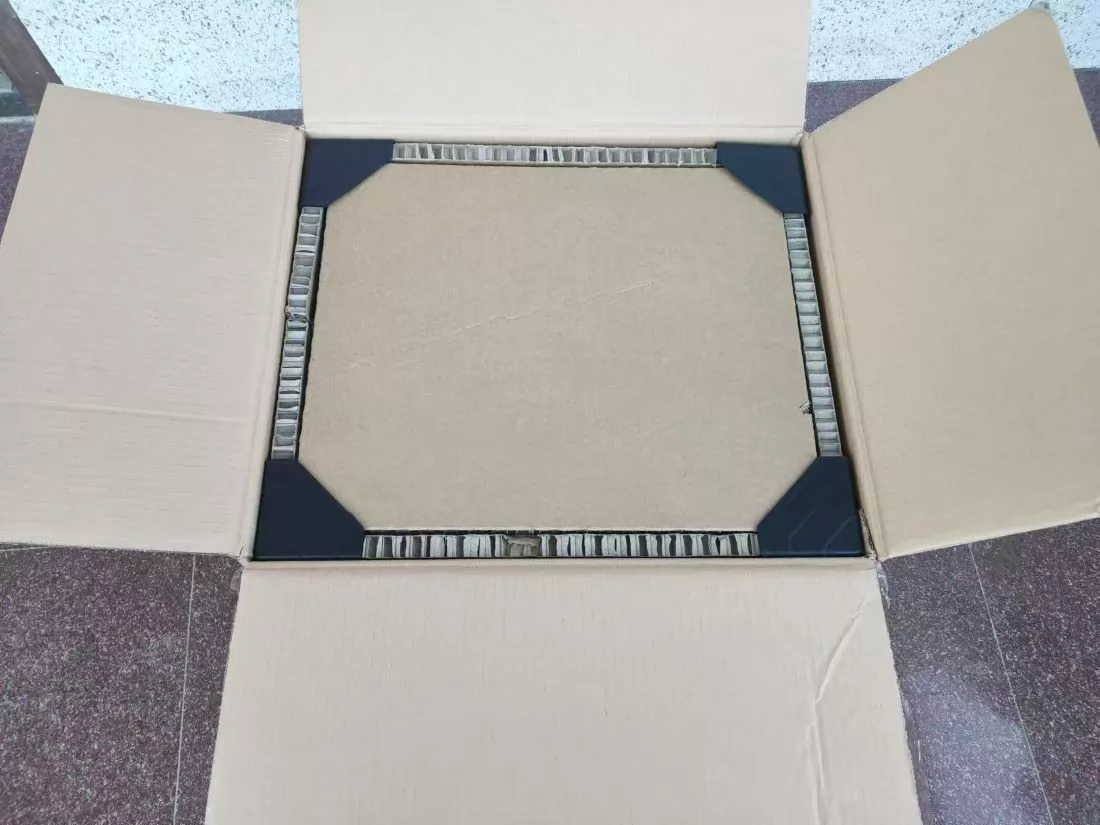
Pre-shipment inspection (PSI) is a lot-specific quality check run on finished home storage goods before they leave the factory, and the difference between a passing inspection and a failed one usually comes down to a 7-point walk-through that the buyer's inspector or QC team performs in the last 7 to 10 working days before ETD. The cost of a missed detail on a 5,000-unit order of bamboo or fabric storage can run from a 30% rework charge at one end to a full container rejection at the other, and most misses show up in five predictable places that any competent inspector should be able to spot in 8 hours on site.
The checklist that follows is the one we run on our own outbound shipments and that we share with European retail buyers who want a defensible QC pass without flying to the factory themselves. It assumes a finished-lot AQL inspection under ISO 2859-1 (the standard most third-party firms apply), but the seven points themselves are the same whether you book a third party, send your own QC, or train the factory's line team.
1. Pre-shipment inspection is not the same as a factory audit
A factory audit evaluates the manufacturer's management system, quality manual, and process discipline. It can be done years before the order is placed, and it tells the buyer whether the supplier is capable of making good product. A pre-shipment inspection evaluates this specific lot, on this specific day, against an AQL-defined sample. We have seen buyers book "an inspection" expecting an audit and receiving a lot check instead, and vice versa. The two cover different risks and should be priced, scheduled, and reported on separately.
| What it covers | Pre-shipment inspection | Factory audit |
|---|---|---|
| Triggered by | Each purchase order | Annual / qualification |
| Looks at | Finished product, this lot | System, process, records |
| Typical duration | 4–8 hours on site (1 inspector) | 1–2 days on site (1–2 auditors) |
| Indicative cost | US$ 220–320 per inspector-day | US$ 1,100–1,500 per auditor-day |
| When the report is useful | Before you wire the balance payment | Before you sign the framework agreement |
| Standards applied | ISO 2859-1 sampling, AQL tables | ISO 9001, BSCI, Sedex SMETA |
If a buyer is short on time and budget, the order of priority is clear: run a pre-shipment inspection on every PO, and run a factory audit on the first PO of the year only. Skipping PSI to save 300 dollars on a 5,000-unit order is the most expensive line item in the whole sourcing budget.
2. When to book your PSI on the calendar
The rule of thumb we use internally: book PSI when 80% of the order is packed, 100% of the lot is finished, and at least 7 working days remain before ETD. Those last 7 days are reserved for inspector travel, any lab tests that need to come back, rework, re-inspection if the first pass fails, and container booking.
Book earlier if your product is a custom colour or your carton is a custom print. Colour matching and print defects are the two categories that take longest to fix once finished goods are already in master cartons. Conversely, do not book later than 80% packed. A 95% packed inspection is a 5% gap that the factory can fill in 48 hours with whatever is on the line that day, which is a different lot in everything but name.
For a Q4 European order, that means the calendar usually looks like this: T-30 days confirm the order, T-21 days production complete, T-14 to T-10 PSI window, T-7 ETD. Buyers who compress this to T-3 PSI are the ones calling us on the day of vessel departure asking for an emergency re-inspection, and emergency re-inspections are usually the ones that fail.
3. The 5 failure modes we see on home storage shipments
The five categories below account for roughly 80% of the AQL failures on bamboo and fabric storage orders we have handled in the last 18 months. They are listed in descending order of frequency.
3.1 Stitch tensile below specification
A buyer specifies a 6 kg pull-strength on the seam that joins the canvas body to the bamboo rim. The factory quotes 6 kg on the pre-production sample. Six weeks later, on the 5,000-unit run, the inspector pulls ten random units, and four of them break at 4.2 to 4.8 kg. The defect is real, the spec was real, and the AQL 2.5 table (accept 10, reject 11 at sample size 200) means the lot is now borderline. The fix is a stitch density change on the sewing machine, which is a 2-day rework window the factory does not have. Lesson: pull-strength tests belong in the pre-production sample, not the PSI.
3.2 Hardware plating oxidation on arrival
A buyer receives 3,200 storage boxes in Hamburg, opens the first container, and finds green bloom on the zinc-plated hinges within 30 days. The PSI was clean because the lot was inspected 11 days earlier in a dry climate. Salt-spray testing (ASTM B117) is a 24-hour test that predicts this within a 2-week cycle, but most fabric and bamboo storage buyers do not request it. Lesson: if the destination is a humid or coastal port, ask the lab report to include ASTM B117 or ISO 9227.
3.3 Carton compression failure in transit
Master cartons are specified as B-flute, double-wall, ECT-32. The factory uses B-flute single-wall because the price was 8% lower. At the consolidation warehouse, five-high stack heights compress the bottom cartons beyond their ECT rating. The first 200 units at the bottom of the stack arrive crushed. PSI does not typically test carton strength — that is an IPC or a factory test — but a quick box-drop test from 60 cm onto a concrete floor at PSI is a useful sanity check. Lesson: buy a one-page ECT and BCT certificate with the order, not just a quote sheet.
3.4 Colour shift under D65 standard light
The catalogue approved a stone-grey canvas. The production run came back in a warm-grey that passes the 30-second eyeball check on the factory floor. Under a D65 light box at the buyer's DC, the difference is visible. The inspector did not have a light box at PSI, or the buyer did not specify Pantone Coated or Pantone TPX. Lesson: write the colour spec as Pantone or lab-dipped swatch, and require the inspector to verify under D65.
3.5 Wrong label version in the box
A buyer places a reorder in August 2026, but the cartons still carry the 2025 label set. The factory used up old packaging before switching to the new GPSR/PPWR-compliant set published in March. The PSI inspector did flag this on the report, but the buyer signed the report anyway because the rest of the lot was clean. Lesson: read the entire PSI report, including the packaging-and-labelling section, and reject the lot if the label set does not match the current spec. For background on the label rules themselves, see our EU packaging and labelling requirements map.
4. AQL 2.5 vs AQL 4.0 — when to use which
AQL (Acceptable Quality Limit) is the statistical sampling rule that turns "is this lot good enough?" into a defensible accept/reject decision. For consumer goods including home storage, the industry default is AQL 0 / 2.5 / 4.0 — zero critical defects, 2.5% acceptance for major defects, 4.0% acceptance for minor defects. The numbers come from ISO 2859-1 (and the substantively identical ANSI/ASQ Z1.4 in the US), and they are not defect rates — they are acceptance numbers that produce a specific statistical behaviour for each sample size.
For a typical 5,000-unit order at General Inspection Level II (the standard default), the sample size is 200 units. The acceptance numbers are then:
| Lot size | Sample | Major AQL 2.5 (accept / reject) | Minor AQL 4.0 (accept / reject) |
|---|---|---|---|
| 501–1,200 | 80 | 5 / 6 | 7 / 8 |
| 1,201–3,200 | 125 | 7 / 8 | 10 / 11 |
| 3,201–10,000 | 200 | 10 / 11 | 14 / 15 |
| 10,001–35,000 | 315 | 14 / 15 | 21 / 22 |
When to tighten: AQL 1.0 for major defects is appropriate for first orders with a new supplier, for any product that is electric, food-contact, or child-facing, and for any order where the cost of a post-shipment recall would exceed 5% of the order value. When to loosen: AQL 4.0 across the board is appropriate for low-value promotional SKUs and for a supplier whose quality history over the last 12 months shows fewer than 1% lots rejected at AQL 2.5. Critical defects stay at 0 regardless — a single critical defect rejects the lot, full stop.
The decision is the buyer's, not the factory's. If the supplier suggests loosening AQL, that is a request for a wider tolerance band, not a quality upgrade. Write the AQL into the PO and the inspection contract the same way you would write the FOB price.
5. The 7-point checklist
The seven points below are what we walk the inspector through on every Kingway outbound lot. Each point is a defect-class trigger (Critical / Major / Minor) so the inspector can mark findings against the AQL table directly. Total walk-through time on a 200-unit sample is 4 to 6 hours with one inspector.
5.1 Dimensional tolerance
Pull 20 units from the sample, measure every dimension called out on the tech-pack against the nominal and the tolerance band. For home storage, the three dimensions that fail most often are outer length (catalogue spec vs. actual), inner depth (which determines whether standard inserts fit), and folded height (which determines the carton spec for the buyer's DC). Mark any unit outside tolerance as Major. Mark any unit that is more than 5 mm outside tolerance as Critical.
5.2 Material weight and hand-feel
Weigh 10 random units on a calibrated scale, against the spec in the tech-pack (canvas GSM, bamboo thickness, fabric weight). The AQL tolerance on weight is typically ±5%. For hand-feel, the inspector should compare three random units to a sealed reference sample using a blind test. Mark weight outside ±5% as Major, outside ±10% as Critical. Mark hand-feel mismatch as Major.
5.3 Stitching and reinforcement
On every unit in the sample, count the stitches per inch on the body seam, the rim seam, and any stress point. A 1.5 mm deviation is acceptable. A pull-test on 5 random units using a calibrated force gauge is the fastest way to find under-stitched lots. Pull below the spec is Major; pull below 80% of spec is Critical. Stitching inconsistency (loose thread, skipped stitches, visible knots) on visible panels is Major; the same defects on hidden panels is Minor.
5.4 Hardware and finish
Inspect every piece of metal hardware on every unit in the sample. Hinges, clasps, rivets, screws, and corner protectors all need to be present, the right finish, and free of visible scratches or plating defects. Any missing piece is Critical (it makes the product unusable). A visible scratch on a visible face is Major. A scratch on a hidden face is Minor. A plating defect on more than 10% of sampled units triggers a Major for the whole lot, regardless of where on the unit it appears.
5.5 Labels, barcodes, and care instructions
Pull one unit from every master carton in the sample and check the label set against the current spec sheet. The label check has its own table in the inspection report and is usually a Critical or Major class on its own. The four things that fail most often: the barcode does not scan (Major), the country-of-origin text is wrong (Critical for customs), the fibre composition is in the wrong language for the destination market (Major), the care symbols use an outdated ISO version (Major). Cross-reference this point with the destination-specific labelling rules you confirmed at the PO stage.
5.6 Packaging integrity
Open 10 random master cartons and inspect 3 retail units from each. Carton must match the spec (flute, print, ECT rating). Print must be the current version, not a stock photo from a previous season. Inner packaging (polybag, tissue, divider) must be present and clean. A carton that is the wrong flute is Major for the lot, because the failure mode (3.3 above) is non-recoverable once the cartons are on a pallet. A print defect is Major if it is on the retail-facing panel, Minor if it is on the non-retail panel.
5.7 Pre-loading photo record
Before the inspector leaves the factory, take 12 photos: the full lot from a corner, four master cartons from each side, the open carton showing the inner pack, the label set on a retail unit, the sealed carton with shipping mark, the lot on the pallet, the pallet wrapped, the loading bay with the empty container, the container door area before loading, the half-loaded container, and the full container with seal number visible. The buyer should receive all 12 with the PSI report, time-stamped, geo-tagged if possible. This is the single most useful evidence pack if a claim arises at destination.
6. Container loading: 3 last-minute checks the PSI does not cover
The PSI ends at the inspection table. The container loading happens a few days later, and the two are different events with different risks. Three checks the buyer should require before the seal goes on.
6.1 Dry container certificate
A used container can carry moisture, residual odours, or pest traces from a previous cargo. The line should issue a container certificate (CSC plate valid, no structural damage, dry, clean, no smell). If the factory cannot produce this, ask for a new container or a different consolidation hub. Bamboo and fabric storage are both hygroscopic — a 30-day ocean transit in a damp container will turn an AQL-passing lot into a mould claim on arrival.
6.2 Loading pattern and weight distribution
Heavier cartons at the bottom, lighter cartons on top, no overhang past the pallet edge, no empty corners. A mis-loaded container can shift in heavy weather, and the claim paperwork will say "load shift" not "defective product". The factory's loading supervisor should photograph the loaded container before sealing, with the photo showing the seal number visible.
6.3 Seal number reconciliation
The seal number on the seal itself, on the bill of lading, and on the inspection report should all match. If the seal number is wrong, the cargo is not insurable in any practical sense — every marine cargo policy requires seal reconciliation. This is a 30-second check that takes 30 days to discover if missed.
7. FAQ
What happens after a failed PSI — can the lot be reworked? Yes, in most cases. A failed PSI triggers a written rework plan, a re-inspection at the factory's cost, and a re-test against the same AQL table. Two consecutive failed inspections on the same order are usually grounds for the buyer to cancel the balance payment and request a new production run. Three failures on a single supplier in a 12-month window is grounds to move the order.
Is a third-party inspector better than sending my own QC? It depends on order frequency and internal QC capacity. For one-off orders below 10,000 units, a third-party inspector (SGS, BV, Intertek, AsiaInspection, or smaller regional firms) is usually more cost-efficient than flying your own team. For ongoing monthly volumes above 50,000 units, an in-house QC stationed near the factory pays for itself within six months.
How far in advance should I book a third-party inspector during Q4? At least 10 working days in mainland China, longer in Vietnam or Bangladesh. Q4 (October to early December) is the peak season, and the major firms book out 14 days ahead. If you are placing orders now for November or December shipment, book the inspection at the same time you place the order.
Does the PSI report have legal force? The PSI report is evidence, not a contract. Most third-party firms' reports are accepted by EU and US retailers as part of a claim file, but the report alone does not bind the supplier. The binding document is the PO plus the inspection clause that defines AQL, sampling standard, defect class schedule, and re-inspection terms.
Does passing PSI mean I have no defects at destination? No. AQL sampling is statistical, not exhaustive. A 200-unit sample on a 5,000-unit lot means 96% of units were not inspected. A buyer should budget for a destination inspection on at least one container in every quarter, particularly for high-value or new-supplier orders.
8. Talk to a Kingway QC team
If you are placing a Q4 home storage order and want a third-party PSI on a Kingway shipment, we work with SGS, BV, and Intertek at our Anji consolidation warehouse and can route your inspection slot through the same booking. Ask for the inspection calendar when you request the quote — most October and November slots for our SKUs are still open at the time of writing.
For an in-house QC arrangement on a multi-container program, our QC lead can host your team for a 1-day pre-shipment walkthrough before the first PO is shipped, free of charge for buyers with a committed annual volume above 200,000 USD. The 7-point checklist above is the document we work from, and we are happy to share the master copy on request. To understand how the inspection clause fits into the broader sourcing model, see our OEM and ODM model framework, or read the 30% cost-reduction case study for how a peer retailer kept QC intact through a re-sourcing cycle.